
Why Protein Isn't Just for Bodybuilders

How it supports Stable Mood, Strength, and Brain Health as we age

When we hear “protein,” many of us picture bodybuilders and protein shakes. But the truth is, protein is one of our most crucial allies for healthy aging, and its benefits go far beyond muscles.
As we age, our bodies become less efficient at using protein. We may also eat a bit less. This makes prioritising protein at each meal more important than ever. Here’s why:
Strength and Independence: protein is the building block of muscle. Preserving muscle mass is key to maintaining strength, balance, and the ability to live independently. It helps us stay active, garden, play with grandchildren, and prevent falls.

A Steadier Mood and Sharper Mind: protein helps regulate blood sugar, preventing those mid-afternoon energy crashes that can leave us feeling irritable or foggy. The amino acids in protein are also used to create neurotransmitters like serotonin and dopamine, which influence our mood and cognitive function.
Current research suggests that adequate protein intake may help support:
Memory and attention
Processing speed and executive functioning
Physical strength and mobility
Brain resilience during ageing
Recovery from illness and stress
Overall healthy ageing

How Much Protein Do Older Adults Need?
The UK Reference Nutrient Intake (RNI) for adults is approximately 0.75 grams of protein per kilogram of body weight per day.
However, many experts now recommend that healthy older adults aim for around:
1.0–1.2 grams of protein per kilogram of body weight each day.
This rises to:
1.2–1.5 grams per kilogram per day
for older adults recovering from illness, experiencing frailty, or at risk of muscle loss.
What Does This Mean in Practice?

For many older adults, a daily target of 80–90 grams of protein is a helpful rule of thumb.
What Does 80–90g of Protein Look Like?
The good news is that you do not need protein powders or specialist products to achieve this.
A typical day might include:

Small amounts soon add up.
It's Not Just About How Much Protein You Eat
Research increasingly suggests that when we eat protein may also matter.
Many people consume very little protein at breakfast, a moderate amount at lunch, and most of their protein with their evening meal.
Instead, experts increasingly recommend spreading protein across the day.
For example:

This may help stimulate muscle maintenance throughout the day and support healthy ageing.

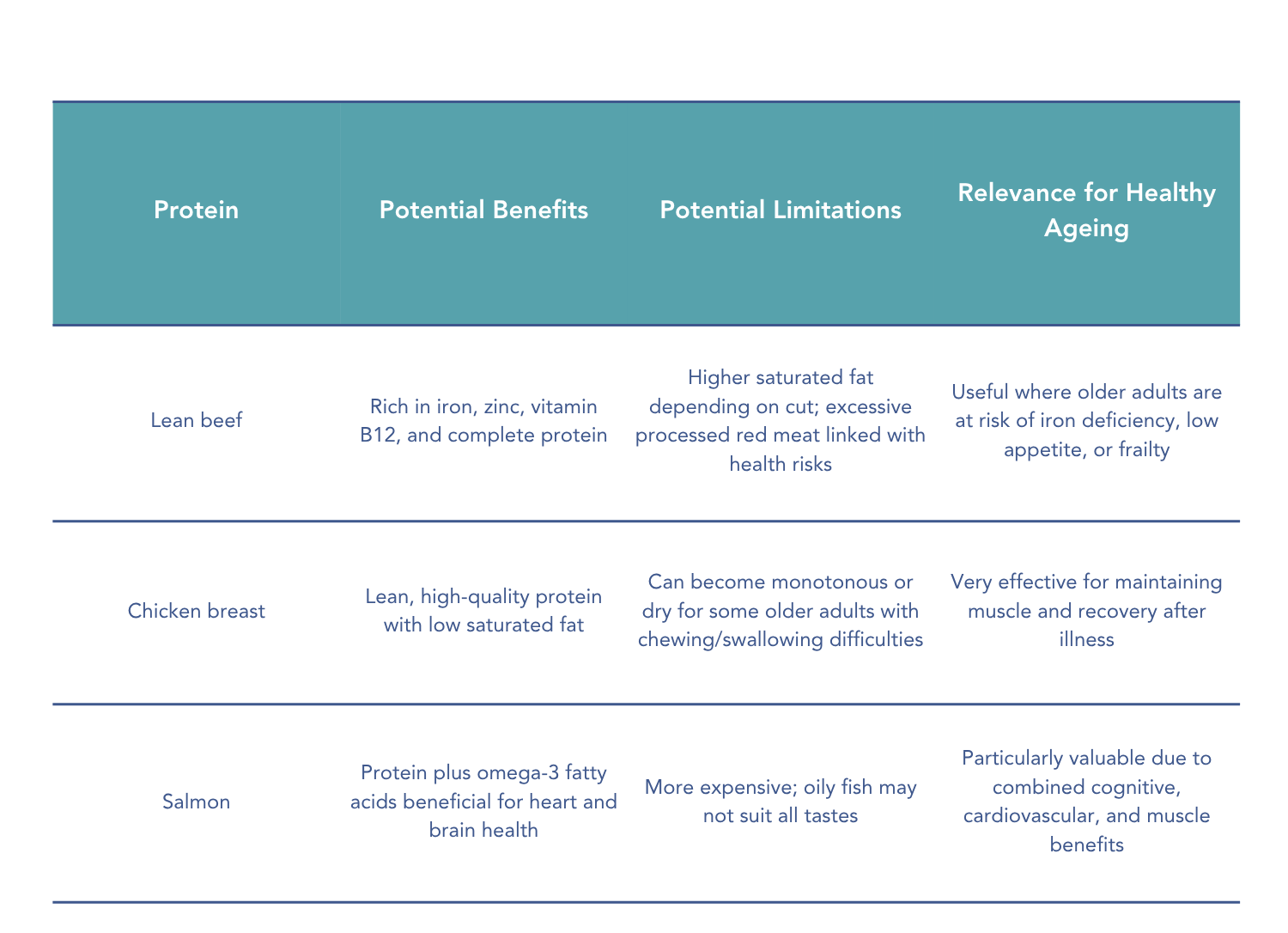
What type of protein is best?
Non-Meat Sources:

Meat Sources:
Key Takeaway
You don’t need shakes or huge steaks. Aim to include a good source of protein - like eggs, Greek yogurt, fish, lean poultry, beans, or lentils - in every meal. It’s a simple, powerful step toward sustaining your vitality.
The strongest evidence suggests protein works best as part of a wider healthy ageing approach that also includes:
Physical activity
Good sleep
Social connection
Cardiovascular health
Cognitive stimulation
A varied and nutrient-rich diet


Comments